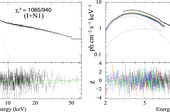
 IIA SANTANU MONDAL
The first detection of X-Ray polarization in a newly discovered galactic transient swift J151857.0-572147
We study the spectropolarimetric properties of a newly discovered black hole (BH) X-ray binary Swift J151857.0-572147 jointly using Imaging X-ray Polarimetry Explorer (IXPE) and NuSTAR observations during 2024 March. The analysis of IXPE data reports the first detection of X-ray with a polarization degree (PD) of 1.34 ± 0.27 and a polarization angle (PA) of ‑13.°69 ± 5.°85 using a model-independent approach, while the model-dependent analysis gives a PD of 1.18 ± 0.23 and a PA of ‑14.°01 ± 5.°80. The joint spectral analysis of the broadband data and NuSTAR analysis in isolation constrain the mass of the central BH between ∼9.2 ± 1.6 and 10.1 ± 1.7M ⊙ and a moderate spin parameter of ∼0.6 ± 0.1–0.7 ± 0.2 with a disk inclination of ∼35° ± 7°–46° ± 15°. The power-law photon index and cutoff energy are 2.19 ± 0.03–2.47 ± 0.06 and ∼36 ± 4–78 ± 10 keV, suggesting a transition to the soft spectral state. Additionally, a relatively lower corona size of 6 ± 1–9 ± 2r S , a low mass outflow rate ( <3%ṀEdd ), and the best-fitted halo accretion is less compared to the disk accretion rate further confirm the same state. The low PD detected in the soft state can be due to repeated scattering inside the dense corona, and the dominant emission from the disk agrees with the low spin and low disk inclination. The hydrogen column density obtained from the fit is relatively high at ∼4–5 × 1022 cm‑2
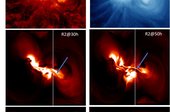 IIA VEMAREDDY, P
Simulating the formation and eruption of flux rope by magneto-friction model driven by time-dependent electric fields
Aiming to capture the formation and eruption of flux ropes (FRs) in the source active regions (ARs), we simulate the coronal magnetic field evolution of the AR 11429 employing the time-dependent magneto-friction model (TMF). The initial field is driven by electric fields that are derived from time-sequence photospheric vector magnetic field observations by invoking ad hoc assumptions. The simulated magnetic structure evolves from potential to twisted fields over the course of two days, followed by rise motion in the later evolution, depicting the formation of an FR and its slow eruption later. The magnetic configuration resembles an inverse S-sigmoidal structure, composed of the potential field enveloping the inverse J-shaped fields that are sheared past one another and a low-lying twisted field along the major polarity inversion line. To compare with observations, proxy emission maps based on averaged current density along the field lines are generated from the simulated field. These emission maps exhibit a remarkable one-to-one correspondence with the spatial characteristics in coronal extreme ultraviolet images, especially the filament trace supported by the twisted magnetic field in the southwest subregion. Further, the topological analysis of the simulated field reveals the cospatial flare ribbons with the quasi-separatrix layers, which is consistent with the standard flare models; therefore, the extent of the twist and orientation of the erupting FR is indicated to be the real scenario in this case. The TMF model simulates the coronal field evolution, correctly capturing the formation of the FR in the observed timescale and the twisted field generated from these simulations serves as the initial condition for the full MHD simulations.
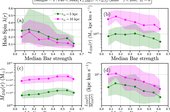 IIA MOUSUMI DAS
The stellar bar–dark matter halo connection in the TNG50 simulations
Stellar bars in disk galaxies grow as stars in near-circular orbits lose angular momentum to their environments, including their dark matter (DM) halo, and transform into elongated bar orbits. This angular momentum exchange during galaxy evolution hints at a connection between bar properties and the DM halo spin λ, the dimensionless form of DM angular momentum. We investigate the connection between halo spin λ and galaxy properties in the presence/absence of stellar bars, using the cosmological magnetohydrodynamic TNG50 simulations at multiple redshifts (0 < zr < 1). We determine the bar strength (or bar amplitude, A2/A0), using Fourier decomposition of the face-on stellar density distribution. We determine the halo spin for barred and unbarred galaxies (0 < A2/A0 < 0.7) in the center of the DM halo, close to the galaxy's stellar disk. At zr = 0, there is an anticorrelation between halo spin and bar strength. Strongly barred galaxies (A2/A0 > 0.4) reside in DM halos with low spin and low specific angular momentum at their centers. In contrast, unbarred/weakly barred galaxies (A2/A0 < 0.2) exist in halos with higher central spin and higher specific angular momentum. The anticorrelation is due to the barred galaxies' higher DM mass and lower angular momentum than the unbarred galaxies at zr = 0, as a result of galaxy evolution. At high redshifts (zr = 1), all galaxies have higher halo spin compared to those at lower redshifts (zr = 0), with a weak anticorrelation for galaxies having A2/A0 > 0.2. The formation of DM bars in strongly barred systems highlights how angular momentum transfer to the halo can influence its central spin.
 IIA ANUPAMA, G. C
Searching for gravitational wave optical counterparts with the zwicky transient facility: summary of O4a
During the first half of the fourth observing run (O4a) of the International Gravitational Wave Network, the Zwicky Transient Facility (ZTF) conducted a systematic search for kilonova (KN) counterparts to binary neutron star (BNS) and neutron star–black hole (NSBH) merger candidates. Here, we present a comprehensive study of the five high-significance (False Alarm Rate less than 1 yr−1) BNS and NSBH candidates in O4a. Our follow-up campaigns relied on both target-of-opportunity observations and re-weighting of the nominal survey schedule to maximize coverage. We describe the toolkit we have been developing, Fritz, an instance of SkyPortal, instrumental in coordinating and managing our telescope scheduling, candidate vetting, and follow-up observations through a user-friendly interface. ZTF covered a total of 2841 deg2 within the skymaps of the high-significance GW events, reaching a median depth of g ≈ 20.2 mag. We circulated 15 candidates, but found no viable KN counterpart to any of the GW events. Based on the ZTF non-detections of the high-significance events in O4a, we used a Bayesian approach, nimbus, to quantify the posterior probability of KN model parameters that are consistent with our non-detections. Our analysis favors KNe with initial absolute magnitude fainter than −16 mag. The joint posterior probability of a GW170817-like KN associated with all our O4a follow-ups was 64%. Additionally, we use a survey simulation software, simsurvey, to determine that our combined filtered efficiency to detect a GW170817-like KN is 36%, when considering the 5 confirmed astrophysical events in O3 (1 BNS and 4 NSBH events), along with our O4a follow-ups. Following Kasliwal et al., we derived joint constraints on the underlying KN luminosity function based on our O3 and O4a follow-ups, determining that no more than 76% of KNe fading at 1 mag day−1 can peak at a magnitude brighter than −17.5 mag.
 IIA SUMANTO CHANDA
More on jacobi metric: Randers–Finsler metrics, frame dragging and geometrisation techniques
In this article, I demonstrate a new method to derive Jacobi metrics from Randers–Finsler metrics by introducing a more generalised approach to Hamiltonian mechanics for such spacetimes and discuss the related applications and properties. I introduce Hamiltonian mechanics with the constraint for relativistic momentum, including a modification for null curves and two applications as exercises: derivation of a relativistic harmonic oscillator and analysis of Schwarzschild Randers–Finsler metric. Then I describe the main application for constraint mechanics in this article: a new derivation of Jacobi metric for time-like and null curves, comparing the latter with optical metrics. After that, I discuss frame dragging with the Jacobi metric and two applications for Randers–Finsler metrics: an alternative to Eisenhart lift, and different metrics that share the same Jacobi metric.
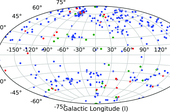 IIA JAYANT MURTHY
A sky survey of ultraviolet sources observed through AstroSat’s UVIT: A point source catalogue
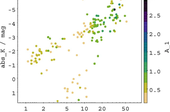
The Ultra Violet Imaging Telescope (UVIT) onboard India’s first dedicated multiwavelength satellite AstroSat observed a significant fraction of the sky in the ultraviolet with a spatial resolution of 1.4. We present a catalogue of the point sources observed by UVIT in the far ultraviolet (FUV; 1 300–1 800 Å) and near ultraviolet (NUV; 2 000–3 000 Å). We carried out astrometry and photometry of 428 field pointings in the FUV and 54 field pointings in the NUV band, observed in 5 filter bands in each channel, respectively, covering an area of about 63 square degrees. The final catalogue contains about 102 773 sources. The limiting magnitude(AB) of the F148W band filter, that has the largest number of detections is ∼21.3. For the NUV channel, we find the limiting magnitude at around ∼23. We describe the final catalogue and present the results of the statistical analysis.
 IIA ANWESH KUMAR MISHRA
A summary of instruments proposed for observing pulsating variables from the Mt. Abu observatory
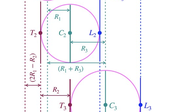
Pulsating variables play a significant role in shaping modern astronomy. Presently it is an exciting era in observational study of variable stars owing to surveys like OGLE and TESS. The vast number of sources being discovered by these surveys is also creating opportunities for 1–2-m class telescopes to provide follow-up observations to characterize these. We present some initial observations of type-II cepheids from the Mt. Abu observatory and highlight the need for dedicated observing runs of pulsating variables. We also present optical designs for several suggested instruments for the Mt. Abu observatory that will contribute towards this goal. We present designs that are fairly simple and yet take due benefit of the unique telescopes and facilities present at the observatory.
 IIA WAGEESH MISHRA
Non-conventional approach for deriving the radial sizes of coronal mass ejections at different instances: discrepancies in the estimates between remote and in situ observations
Understanding the evolution of radial sizes and instantaneous expansion speeds of coronal mass ejections (CMEs) is crucial for assessing their impact duration on Earth’s environment. We introduce a non-conventional approach to derive the CME’s radial sizes and expansion speeds at different instances during its passage over a single-point in situ spacecraft. We also estimate the CME’s radial sizes and expansion speeds during its journey from the Sun to 1 au using the 3D kinematics of different CME features, including the leading edge, centre, and trailing edge. The continuous 3D kinematics of the CME is estimated by employing the graduated cylindrical shell and stereoscopic self-similar expansion reconstruction methods on multipoint observations from coronagraphs and heliospheric imagers combined with the drag-based model. We choose the 2010 April 3 CME as a suitable case for our study, promising a more accurate comparison of its remote and in situ observations. We show that the introduced non-conventional approach can provide better accuracy in estimating radial sizes and instantaneous expansion speeds of CMEs at different instances. We examine the aspect ratio of the CME, which influences its expansion behaviour and shows the discrepancy between its value in the corona and interplanetary medium. Our study highlights significant inconsistencies in the arrival time, radial size, and expansion speed estimates obtained from remote and in situ observations. We advocate for future studies leveraging multispacecraft in situ observations and our non-conventional approach to analyse them to improve the comprehension of CME dynamics in the solar wind.
 IIA ARUNA GOSWAMI
Asteroseismology of the mild Am δ Sct star HD 118660: TESS photometry and modelling
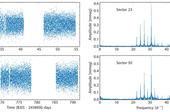
We present the results of an asteroseismic study of HD 118660 (TIC 171729860), being a chemically peculiar (mild Am) star exhibiting δ Scuti (δ Sct) pulsations. It is based on the analysis of two sectors of time-series photometry from the space mission TESS (Transiting Exoplanet Survey Satellite) and seismic modelling. It yielded the detection of 15 and 16 frequencies for TESS sectors 23 and 50, respectively. The identified pulsation modes include four radial ( = 0) and five dipolar ( = 1) ones. The radial modes are overtones with order n ranging from 3 and 6. Such high values of n are theoretically not expected for stars with the effective temperature of HD 118660 (Teff ≈ 7550 K) located near the red edge of the δ Sct instability strip. To estimate the asteroseismic parameters, we have generated a grid of stellar models assuming a solar metallicity (Z = 0.014) and different values for the convective overshooting parameter (0.1 ≤ αov ≤ 0.3). We conclude that the analysis of the radial modes is insufficient to constrain αov and Z for δ Sct stars. The value for the equatorial velocity of HD 118660 derived from the seismic radius and the rotational frequency is consistent with values found in the literature
 IIA SIVARANI, T
Low-resolution transit spectroscopy of three hot Jupiters using the 2 m Himalayan Chandra telescope
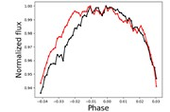
Here, we present the low-resolution transmission spectroscopy of three giant planets using the Himalayan Faint Object Spectrograph Camera (HFOSC) on the 2 m Himalayan Chandra Telescope (HCT) in Hanle, India. It is the first application of transmission spectroscopy with HCT. This study presents results from a single transit, each for three planets: HAT-P-1b, KELT-18b, and WASP-127b. The selection of suitable reference stars assisted in accurately tracking slit losses for the long cadence observations that are needed to achieve the required signal-to-noise ratio (SNR). We employ the common mode correction technique, utilizing a white light transit curve to minimize time-dependent systematic errors. The observed spectra for WASP-127b and HAT-P-1b agree with previouslow-resolution transitspectroscopic observations using other observing facilities. We confirm the presence of Rayleigh scattering in the atmosphere of WASP-127b. In addition, we provide the first low-resolution transmission spectrum for KELT-18b. Modelling the exoplanet atmosphere with HFOSC and available IR observations from HST and Spitzer for WASP-127b and HAT-P-1b shows that HFOSC can be an alternative optical instrument to use in conjunction with IR observations to constrain the atmospheric parameters better