 IIA ARCHANA SOAM
Herschel investigation of cores and filamentary structures in L1251 located in the Cepheus flare
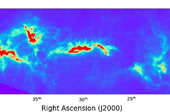
Molecular clouds are the prime locations of star formation. These clouds contain filamentary structures and cores which are crucial in the formation of young stars. Aims: In this work, we aim to quantify the physical properties of structural characteristics within the molecular cloud L1251 to better understand the initial conditions for star formation. Methods: We applied the getsf algorithm to identify cores and filaments within the molecular cloud L1251 using the Herschel multiband dust continuum image, enabling us to measure their respective physical properties. Additionally, we utilized an enhanced differential term algorithm to produce high-resolution temperature maps and column density maps with a resolution of 13.5′′. Results: We identified 122 cores in the region. Out of them, 23 are protostellar cores, 13 are robust prestellar cores, 32 are candidate prestellar cores (including 13 robust prestellar cores and 19 strictly candidate prestellar cores), and 67 are unbound starless cores. getsf also found 147 filament structures in the region. Statistical analysis of the physical properties (mass (𝑀), temperature (𝑇), size, and core brightness (hereafter, we are using the word luminosity (𝐿)) for the core brightness) of obtained cores shows a negative correlation between core mass and temperature and a positive correlation between (𝑀/𝐿) and (𝑀/𝑇). Analysis of the filaments gives a median width of 0.14 pc and no correlation between width and length. Out of those 122 cores, 92 are present in filaments ( 75.4%) and the remaining were outside them. Out of the cores present in filaments, 57 ( 62%) cores are present in supercritical filaments (𝑀line > 16𝑀⊙/pc)
 IIA PUNITH, R
Laghu Mānasa Vyākhyā – a 17th century astronomy manuscript in Kannaḍa
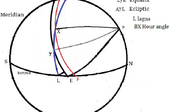
We have studied two manuscripts as commentaries called Laghu Mānasa Vyākhyā and titled grahaṇānayanam. Our attempts to decipher the contents have revealed that they are commentaries in Sanskrit (the script is Kannada) on the 9th century manuscript called Laghu Mānasa by Munjalācarya. These two manuscripts have solved examples of eclipses of śaka 1528 (1606CE) and 1549 (1627CE); the procedure gives all the details to get the mean positions of the Sun, the Moon, and the nodes and subsequently, the timings and magnitude of eclipses. The first text is incomplete; the second has complete calculations. With the details provided for the procedure, we find that the method for finding the sine is unique and differs from that of Bhaskarācārya and Ganeśha Daivajnya. We present the calculations, verify them, and compare them with online software computations. The agreement is within the error limits of observations.
 IIA ARCHANA SOAM
ATOMS: ALMA three-millimeter observations of massive star-forming regions – XVIII. On the origin and evolution of dense gas fragments in molecular shells of compact H II regions
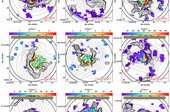
Fragmentation and evolution for the molecular shells of the compact H II regions are less explored compared to their evolved counterparts. We map nine compact H II regions with a typical diameter of 0.4 pc that are surrounded by molecular shells traced by CCH. Several to a dozen dense gas fragments probed by H 13 13 CO ++ are embedded in these molecular shells. These gas fragments, strongly affected by the H II region, have a higher surface density, mass, and turbulence than those outside the shells but within the same pc-scale natal clump. These features suggest that the shells swept up by the early H II regions can enhance the formation of massive dense structures that may host the birth of higher mass stars. We examine the formation of fragments and find that fragmentation of the swept-up shell is unlikely to occur in these early H II regions, by comparing the expected time scale of shell fragmentation with the age of H II region. We propose that the appearance of gas fragments in these shells is probably the result of sweeping up pre-existing fragments into the molecular shell that has not yet fragmented. Taken together, this work provides a basis for understanding the interplay of star-forming sites with an intricate environment containing ionization feedback such as those observed in starburst regions.
 IIA ARUN SURYA
uGMRT Survey of EXoplanets Around M-dwarfs (GS-EXAM): Radio Observations of GJ 1151
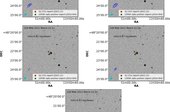
Coherent radio emission with properties similar to planetary auroral signals has been reported from GJ 1151, a quiescent, slow-rotating mid-M star, by the LOFAR Two-meter (120–170 MHz) Sky Survey. The observed LOFAR emission is fairly bright at 0.89 mJy with 64% circular polarization, and the emission characteristics are consistent with the interaction between an Earth-sized planet with an orbital period of 1–5 days and the magnetic field of the host star. However, no short-period planet has been detected around GJ 1151. To confirm the reported radio emission caused by the putative planet around GJ 1151 and to investigate the nature of this emission, we carried out upgraded Giant Metrewave Radio Telescope observations of GJ 1151 at 150, 218, and 400 MHz over 33 hr across ten epochs. No emission was detected at any frequency. While at 150 and 218 MHz, nondetection could be due to the low sensitivity of our observations, at 400 MHz, the rms sensitivities achieved were sufficient to detect the emission observed with LOFAR at ∼20σ level. Our findings suggest that the radio emission is highly time variable, likely influenced by the star-planet system's phase and the host star's magnetic field. Additional observations below 170 MHz, at more frequent epochs (as the periodicity of the emission is unknown), especially during periods of high stellar magnetic field strength, are needed to confirm the emission.
 IIA SOUMYARANJAN KHUNTIA
Deciphering the evolution of thermodynamic properties and their connection to the global kinematics of high-speed coronal mass ejections using FRIS model
Most earlier studies have been limited to estimating the kinematic evolution of coronal mass ejections (CMEs), and only limited efforts have been made to investigate their thermodynamic evolution. We focus on the interplay of the thermal properties of CMEs with their observed global kinematics. We implement the Flux rope Internal State model to estimate variations in the polytropic index, heating rate per unit mass, temperature, pressure, and various internal forces. The model incorporates inputs of 3D kinematics obtained from the Graduated Cylindrical Shell (GCS) model. In our study, we chose nine fast-speed CMEs from 2010 to 2012. Our investigation elucidates that the selected fast-speed CMEs show a heat-release phase at the beginning, followed by a heat-absorption phase with a near-isothermal state in their later propagation phase. The thermal state transition, from heat release to heat absorption, occurs at around 3( ± 0.3) to 7(± 0.7) R ⊙ for different CMEs. We found that the CMEs with higher expansion speeds experience a less pronounced sharp temperature decrease before gaining a near-isothermal state. The differential emission measurement (DEM) analysis findings, using multiwavelength observation from Solar Dynamics Observatory/Atmospheric Imaging Assembly, also show a heat release state of CMEs at lower coronal heights. We also find the dominant internal forces influencing CME radial expansion at varying distances from the Sun. Our study shows the need to characterize the internal thermodynamic properties of CMEs better in both observational and modeling studies, offering insights for refining assumptions of a constant value of the polytropic index during the evolution of CMEs
 IIA PARTHASARATHY, M
High-resolution spectroscopy of the variable hot post-AGB star LS 4331 (IRAS 17381‑1616)
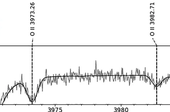
An analysis of the high-resolution (R∼48000) optical spectrum of hot (B1Ibe) post-AGB star LS 4331 (IRAS 17381‑1616) is presented. The detailed identification of the observed absorption and emission features in the wavelength range 3700–9200 Å is carried out for the first time. The atmospheric parameters and chemical composition of the star are derived from the non-LTE analysis of absorption lines. We estimated Teff=20900±500 K, logg=2.57±0.08, Vr=-51.7±0.8 km s-1, ξt=24±4 km s-1 and vsini=30±5 km s-1. An abundance analysis for C, N, O, Mg, Al, S, and Si reveals that the N and O abundance is close to solar while metal underabundances relative to the solar value (i.e., [Mg/H]=-1.04 dex, [Al/H]=-1.20 dex, [Si/H]=-0.46 dex) are found. LS 4331 is a high galactic latitude metal-poor and carbon-deficient hot post-AGB star. The underabundance of carbon ([C/H]=-0.64 dex) is similar to that found in other hot post-AGB stars and indicates that the star's AGB phase of evolution was terminated before the third dredge-up. Plasma diagnostics are derived from the nebular emission lines. The presence of nebular emission lines in the spectrum of LS 4331 indicates that the photoionization of the circumstellar envelope has already started. The nebular parameters and expansion velocity of the nebula are derived. Using the Gaia DR3 distance, the absolute luminosity of the star is derived, and the star's position on the post-AGB evolutionary tracks suggests that its initial main sequence mass is about 1.2 M⊙. It is also reported that fast irregular brightness variations with an amplitude of up to 0.3 mag in the V band have been found in the star, typical of hot post-AGB objects.
 IIA VIPIN KUMAR SHARMA
Probing massive gravitons in f(R) with lensed gravitational waves
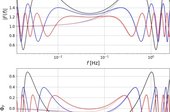
We investigate the novel features of gravitational wave solutions in f(R) gravity under proper gauge considerations in the shifted Ricci scalar background curvature (R1+ϵ). The solution is further explored to study the modified dispersion relations for massive modes at local scales and to derive constraints on ϵ. Our analysis yields new insights as we scrutinize these dispersion effects on the polarization (modified Newman-Penrose content) and lensing properties of gravitational waves. It is discovered that the existing longitudinal scalar mode, and transverse breathing scalar mode are both independent of the mass parameter for ϵ<<1. Further, by analysing the lensing amplification factor for the point mass lens model, we show that lensing of gravitational wave is highly sensitive to these dispersion effects in the milli-Hertz frequency (wave optics regime). It is expected that ultra-light modes, having mass about O(10‑15) eV for ϵ<<1(≈10‑7) lensed by (103≤MLens≤106)M⊙ compact objects are likely to be detected by the advanced gravitational wave space-borne detectors, particularly within LISA's (The Laser Interferometer Space Antenna) sensitivity band.
 IIA DEEPAK
Stellar substructures in the galactic disc and halo: properties, origins, and evolution
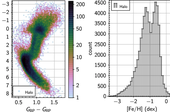
Spatial, kinematic, and orbital properties, along with ages and chemical compositions of the thin disc, thick disc, and various stellar substructures in the halo, are studied based on data from the LAMOST and Gaia surveys. The star formation in the Galactic thin and thick disc, with peak metallicities of ‑ 0.20 and ‑ 0.45 dex, is found to have peaked about 5.5 and 12.5 Gyr ago, respectively. The thin disc is also found to have experienced an initial star formation burst about 12.5 Gyr ago. The pro-grade population Splash and hot-disc (HD), with peak metallicity of about ‑ 0.60 and ‑ 0.43, are found to be about 13.03 and 12.21 Gyr old, respectively, with peak eccentricity of 0.70 and 0.35, are understood to be of in situ origin. The Gaia-Enceladus/Sausage (GE/S), Thamnos and Sequoia, with peak metallicity of about ‑ 1.31, ‑ 1.36, and ‑ 1.56, are found to be about 11.66, 12.89, and 12.18 Gyr, respectively, and are understood to be remnants of dwarf galaxies merged with the Milky Way. The HD, Splash, and Thamnos have experienced chemical evolution similar to the thick disc, while GE/S, Sequoia, and Helmi stream have experienced distinct chemical enrichment of iron and α-process elements.
 IIA ARUN SURYA
Demography of stellar radio population within 500 pc: a VLASS-gaia DR3 study
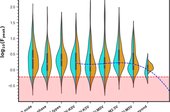
In this work, we have carried out a systematic analysis of the Very Large Array Sky Survey (VLASS) quick look catalogs together with Gaia DR3 to identify the optical counterparts of 3 GHz radio emitters within 500 pc to obtain a homogeneous statistical sample of stellar radio sources. We have identified distinct populations of 3 GHz emitters across the Gaia DR3 color–magnitude diagram. We also present candidate sources (transient, highly variable, or background artifacts) that can be confirmed by follow-up observations. A majority of the detected sources constitute main-sequence G-, K-, and M-type stars, including ultracool dwarfs. Pinning down the origin of radio emission from these populations can help us gain further insights into the origin of stellar and planetary magnetic fields. By analyzing the variation of brightness temperature of the sources with their spectral type, we have tentatively associated possible emission mechanisms with different object types. We inspected the correlation between quiescent radio and X-ray emission for our sample, which can provide crucial insights into the current understanding of the Gudel–Benz relationship, which is essential for modeling steady radio emission and coronal heating. This VLASS-Gaia DR3 analysis acts as a pilot study for follow-up observations at multiple wavelengths to better understand stellar structure, model flaring activities, and detect radio emission caused by star–planet interactions.
 IIA RAMESH, R
New results on the onset of a coronal mass ejection from 5303 Å emission line observations with VELC/ADITYA-L1
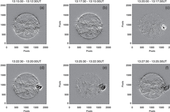
We report on the onset of a coronal mass ejection (CME) using spectroscopic observations in the 5303 Å coronal emission line with the Visible Emission Line Coronagraph (VELC) onboard ADITYA-L1, the recently launched first Indian space solar mission. The CME was observed on 2024 July 16 in association with an X1.9 class soft X-ray flare from heliographic location S05W85. The VELC observations were near the west limb of the Sun during the CME. The results obtained helped to constrain the onset time of the CME. In addition, they indicate a ≈50% decrease in the coronal intensity near the source region of the CME due to mass depletion, a ≈15% enhancement in the emission line width, and a redshifted Doppler velocity of about ≈10 km s‑1. The nonthermal velocity associated with the line broadening is ≈24.87 km s‑1.